
What can a Sunday School record book, an old photo album, or a handful of receipts for wholesale goods tell us about the past?
Sometimes, a surprising amount.
In archives, even small and ordinary objects can preserve powerful pieces of local history—memories of families, communities, and everyday lives that rarely appear in textbooks. During a recent presentation at the Watauga County Public Library hosted by the Digital Watauga Project, Dr. Emily Kader, Curator for Distinctive Collections, shared a selection of unusual and revealing items from the W.L. Eury Appalachian Collection at Appalachian State University. Together, these objects demonstrate how physical artifacts can open unexpected windows into the past.
Her message was simple: archives are full of objects that tell stories—sometimes in surprising ways.
Archives Are Meant to Be Used
Rare books and archival materials can sometimes sound intimidating, but they are meant to be explored.
At Belk Library and Information Commons, visitors can access materials from the Special Collections Research Center by appointment. Librarians, archivists, and student assistants help researchers navigate catalogs, finding aids, and rare book collections to explore subjects that interest them.
“Navigating archives can be challenging,” Dr. Kader said, “but you should never be afraid to ask for help.”
Object Spotlight: A Sunday School Record Book
What it is
A handwritten Sunday School attendance ledger from Mabel Methodist Episcopal Church, South, in Watauga County.
Why it matters
At first glance, it looks like an ordinary church ledger. But the Sunday School record book from Mabel Methodist Church reveals the names, families, and stories of an entire community.
What we learn from it
The names recorded in the book belonged to families who attended church together week after week. Tucked inside the ledger are additional traces of community life, including a pasted-in obituary clipping for a member of the Perry family and a list of church officers. Together, these fragments show how the church functioned not only as a place of worship but also as a center of local social life.
Selected Images
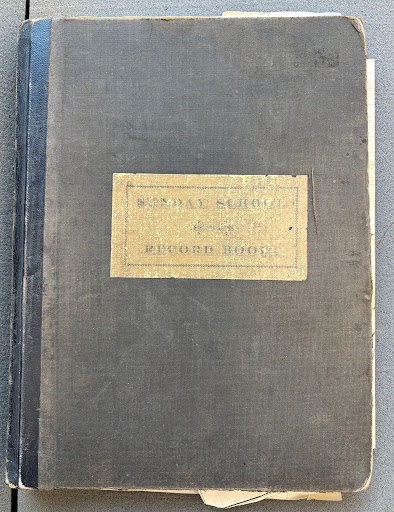
Sunday School Record Book cover
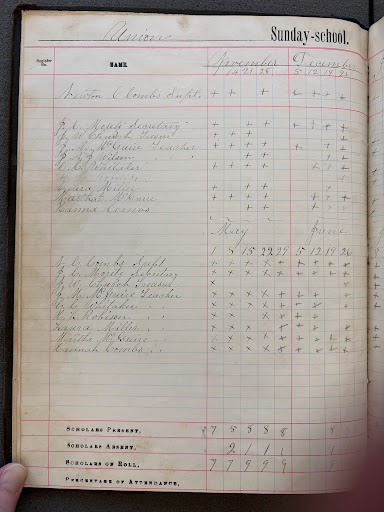
Attendance page listing congregation members
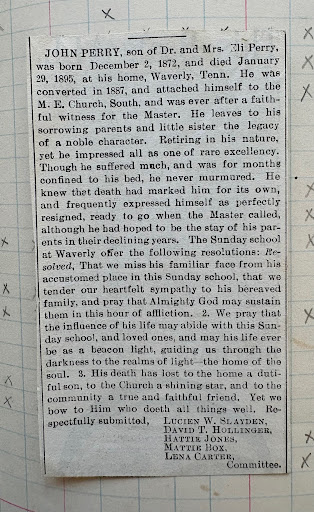
Perry family obituary clipping
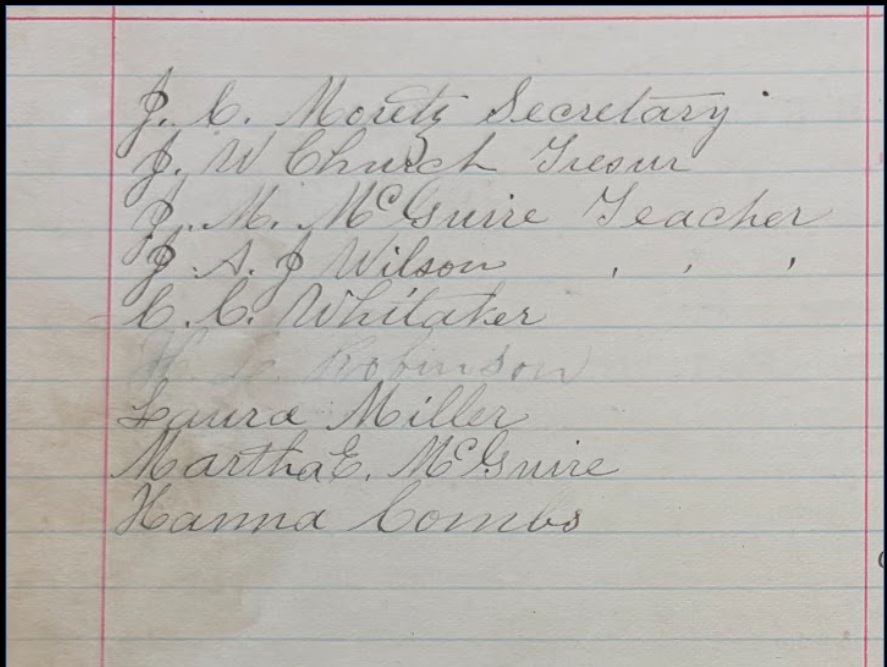
List of church officers
Object Spotlight: The McQueen Family Portraits
What they are
Three chalk portraits and a miniature portrait associated with the McQueen family of the Beaverdam community in western Watauga County.
Why they matter
Portrait collections like these provide rare visual documentation of African American life in the High Country during the late nineteenth and early twentieth centuries.
What we learn from them
Although the individuals depicted are not identified by name, they are believed to represent relatives of Horace McQueen of Beaverdam. Their portraits preserve the presence and dignity of individuals whose stories are only partially documented in written records.
Selected Images
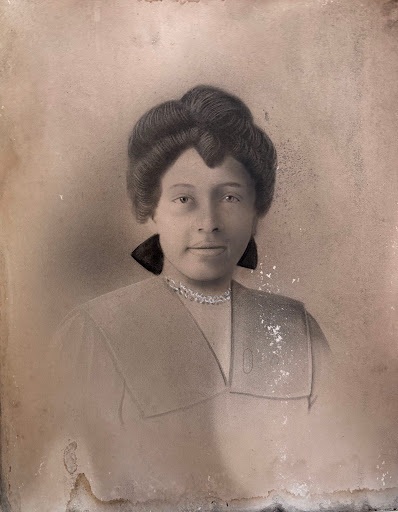
Portrait of a young African American woman
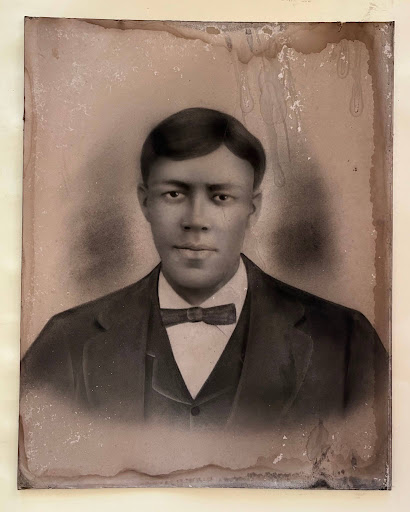
Portrait of a young African American man
The presentation also highlighted the 1942 book Negro [sic] Life in Watauga County by Frazier Robert Horton. A Boone native, Horton attended The Agricultural and Technical College in Greensboro (now NC A&T University), a Historically Black College, and wrote the book for his thesis. This volume, which richly documents the life of African American residents of Watauga County as seen by a member of the Black community, is available to read online, in its entirety, courtesy of the DigitalNC Project (link here).
Object Spotlight: The Taylor & Mast Store Receipts
Sometimes the smallest documents reveal the richest stories. Together, these objects reveal how archival materials—from church records to business receipts—can illuminate different aspects of everyday life in the High Country.
What they are
Wholesale (and other) receipts and papers from the Taylor & Mast Store in Valle Crucis.
Why they matter
These everyday business records reveal the commercial networks that connected rural Appalachian communities to regional markets.
What we learn from them
Goods as varied as soda pop, coffins, cigars, envelopes, and pharmaceutical supplies were purchased wholesale in cities like Kingsport and Bristol and resold in the Watauga River Valley. Receipts like these quietly document the rhythms of trade and daily life in the mountains more than a century ago.
Selected Images
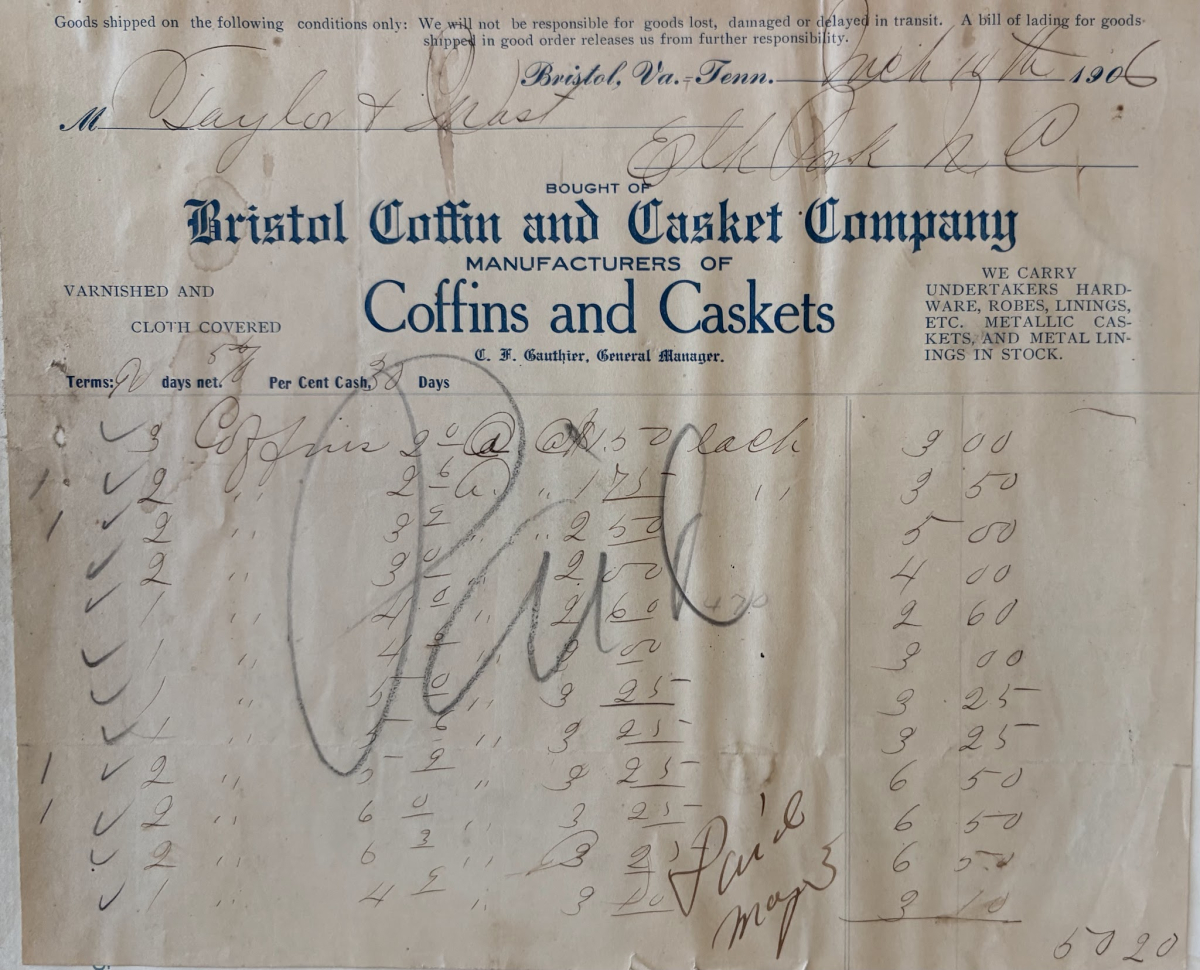
Receipt for wholesale coffins and caskets
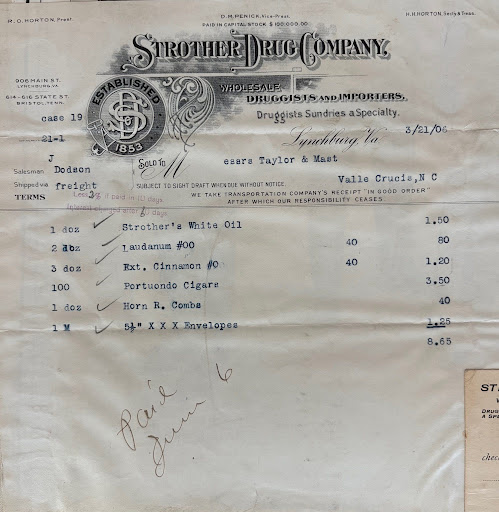
Wholesale drug store marchandise purchase invoice
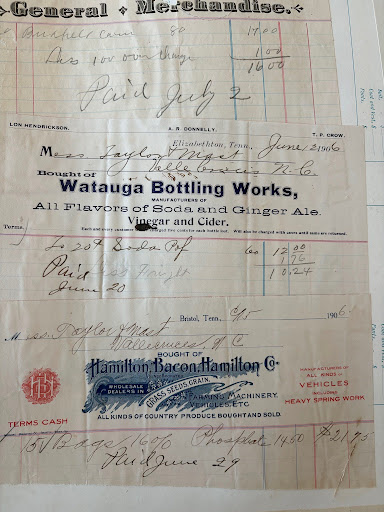
Soda pop and phosphate invoice
Object Spotlight: Everyday Life in Old Photographs
Photographs often preserve the most immediate glimpses of everyday life.
A photo album from the Shull’s Mill community, dating from the late nineteenth and early twentieth centuries, captures informal moments rarely recorded in written documents.
Young men pause to pose for a photograph, a young person gathers berries, and children enjoy time outdoors in the water.
Many of the images display a candidness that contrasts with the formal portrait style typical of some early photography.
“The region has been represented so solemnly for so long,” Kader said.
“It’s nice to see other kinds of representation.”
Selected Images
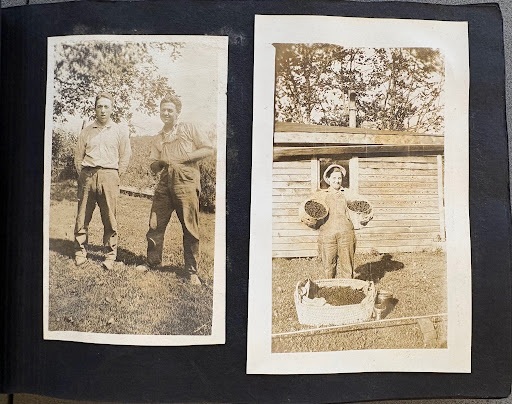
Scenes from the Shull’s Mill community
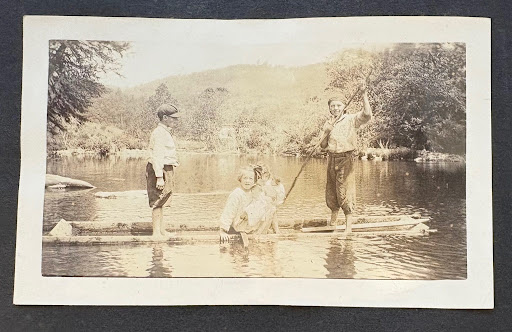
Children in a flat-bottom boat
Many more images (over 450!) from the Shull's Mill community of Watauga County are available online via our Digital Collections, Shull's Mill Photographs.
Object Spotlight: Valle Crucis Mission Life
Historical photographs from the Valle Crucis Episcopal Mission also provide glimpses of community life.
Selected Images
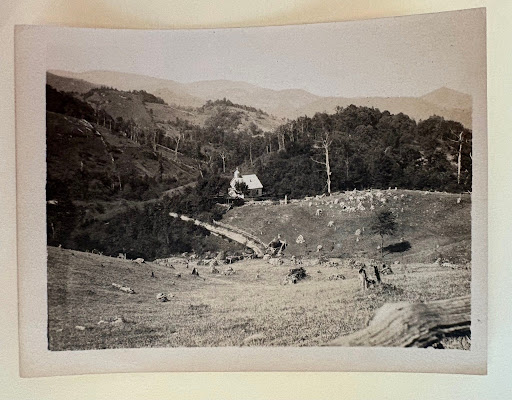
Saint John’s Episcopal Church, Valle Crucis
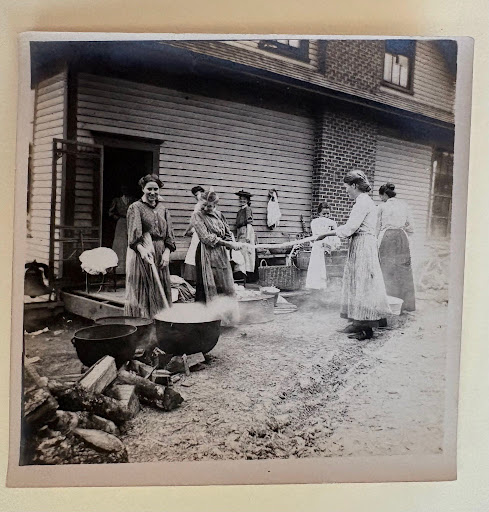
Outdoor domestic scene in Valle Crucis: laundry day?
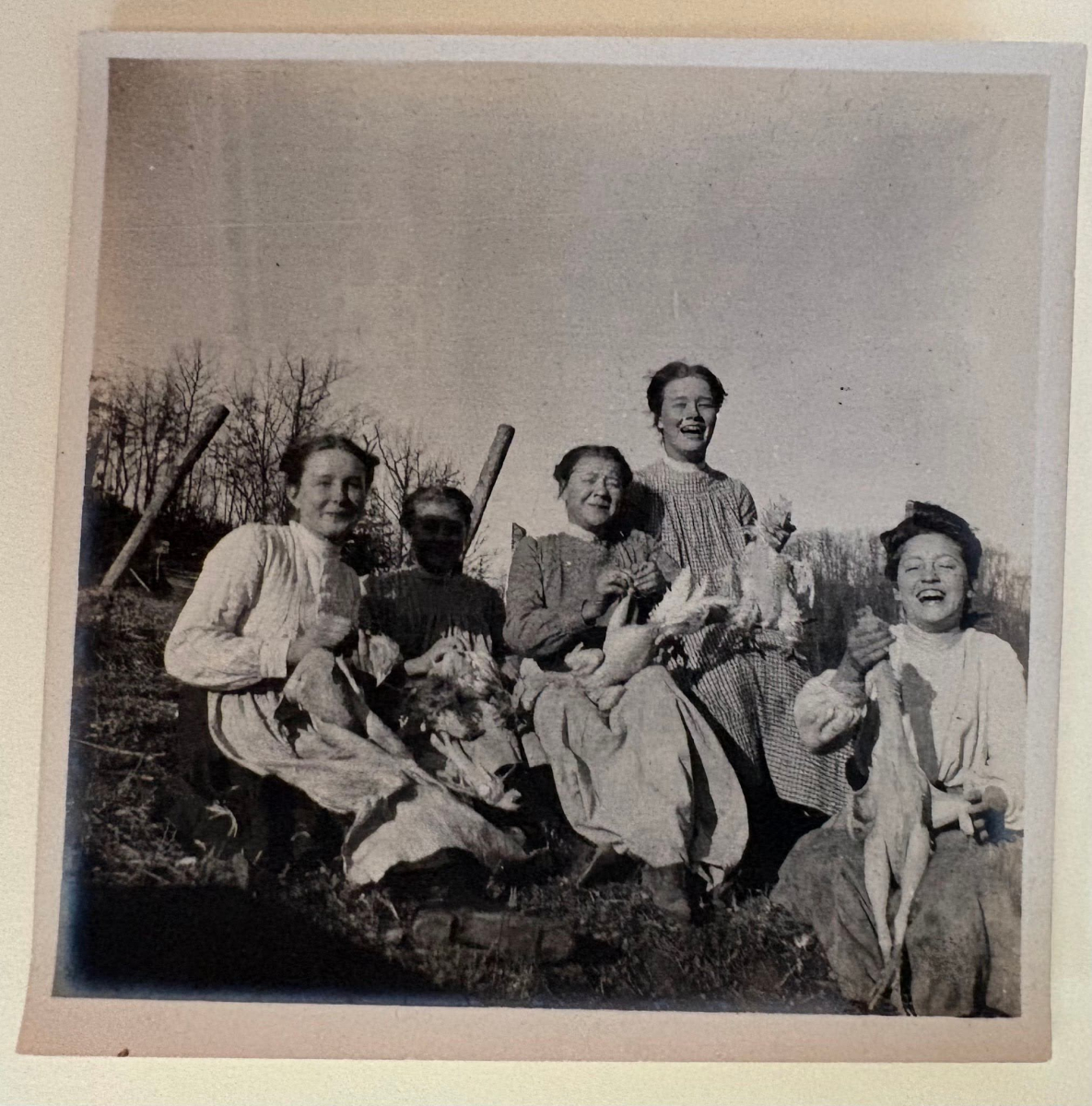
Chicken-pluckin' time in Valle Crucis: in this candid image, many hands seem to have made light the work for the women pictured.
Object Spotlight: Boone Through the Eyes of Schoolchildren
Archives also preserve how young people once understood their own community.
Two handmade books created by Boone schoolchildren in 1930 and 1940–41 combine drawings, handwritten notes, and local historical lore and observations.
One volume records details about Boone’s early town government, including references to the punishments once carried out at the Critcher Hotel. Another describes everyday life, including local industries, household heating methods, and the work of the Boone Handicraft Center.
Selected Images
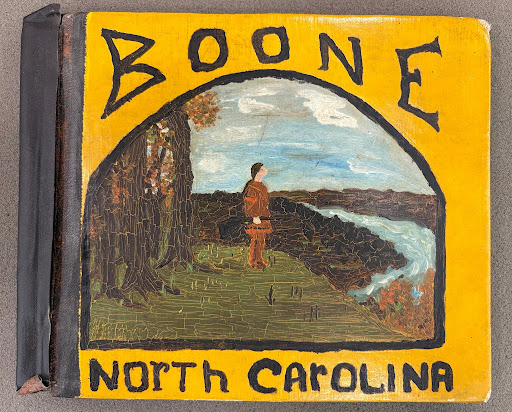
Cover of a student book about Boone (1930)
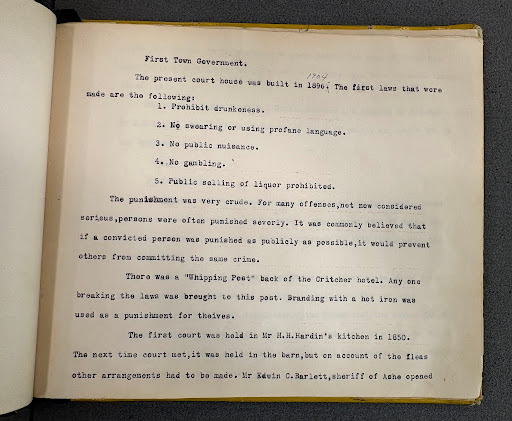
Page describing early Boone town government and justice practices, 1930
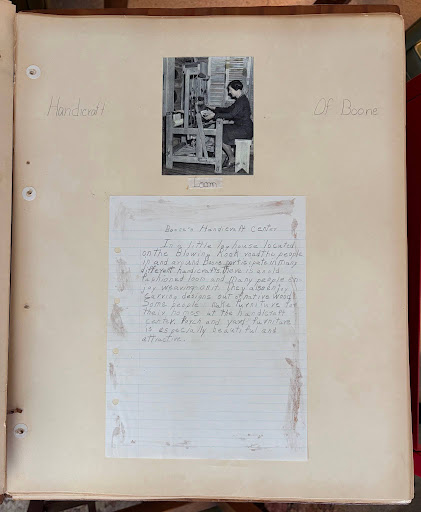
Description of the Boone Handicraft Center with photograph of a loom in use
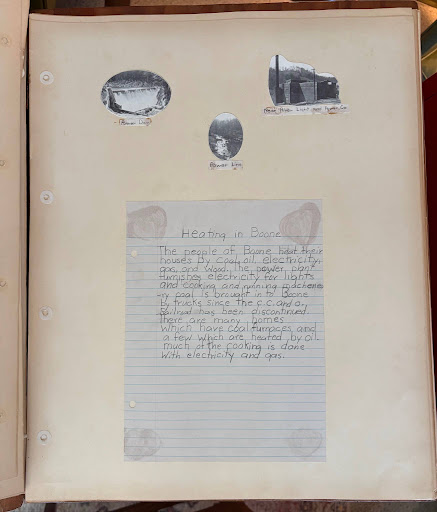
Page from the 1940–41 third grade class work, "The Story of Boone," describing heating and cooking fuels of the time
The Curator’s Eye: Finding Stories in the Archives
For Dr. Emily Kader, the excitement of archives lies in discovering stories that have not yet been widely told.
“Everything from children to tobacco farm workers,” she said.
“Finding those histories is what energizes my imagination.”
The objects she shared during the presentation—church ledgers, portraits, store receipts, photographs, and student notebooks—demonstrate how seemingly ordinary items can reveal the lived experiences of earlier generations.
Many more such stories remain preserved in the collections of the Special Collections Research Center at Appalachian State University Libraries, where researchers, students, and community members are invited to explore them.
A single receipt, photograph, or notebook page may appear small on its own. But together, these pieces form the mosaic of local history—waiting to be discovered by the next curious visitor.
Closing Image
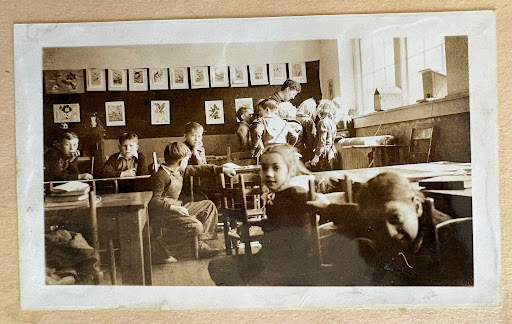
Class photograph from the class-created 1940-era history of Boone book.
Presentation and images by Dr. Emily Kader, PhD., Curator for Distinctive Collections
Blog post compiled by Ross Cooper, Public Services Associate
Collections and Rare Books Featured:
AC-109: Mabel M.E. Church, South Sunday School Records (1886-1935)
AC-150: H.W. and Cora Jeffcoat papers (1894-1933)
AC-898: McQueen Family Portraits (late 19th-early 20th century)
AC-621: Shull’s Mill Papers (late 19th-early 20th century)
AC-269: Taylor and Mast General Store book of receipts (1904-1928)
AC-182: Reverend J. Norton Atkins Papers (Photographs, 1910-1919)
AC-024: Unidentified Memory Book (1928-1931, 1976)
F264.B6 D48 1930: Development of Boone (1930) - By Appointment (Appalachian Collection Rare Books)
F264.B6 S76 1940: The Story of Boone, 1940-1941 - By Appointment (Appalachian Collection Rare Books)
- F262.W34 H6: Negro Life in Watauga County (also available in a digital version online, hosted by the North Carolina Digital Heritage project), Browsable Stacks, Appalachian Collection
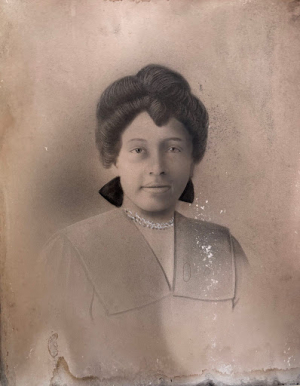
A portrait of a young African American women, with fancy attire and jewelry
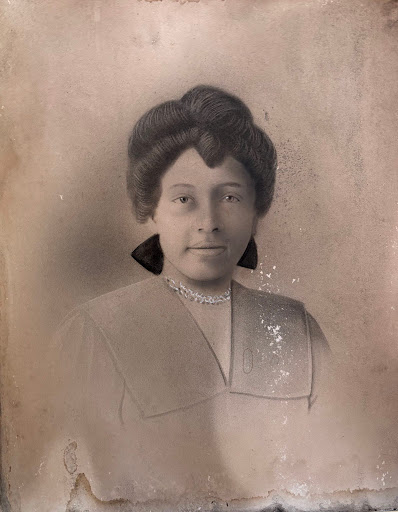
Portrait of a young African American woman from the McQueen Family Portraits