
Continuing the consideration of the early photographs of Boone, Watauga County, and the wider area now known as The High Country within the archives of the Special Collections Research Center, we turn again to the Rev. J. Norton Atkins Papers collection. As detailed in a previous installment, Atkins served as a teacher in Valle Crucis, Watauga County, in the early 1900s before beginning a lengthy career as a pastor within the Episcopal Church, which had been conducting missionary and teaching activity centered on Valle Crucis since the 1840s.
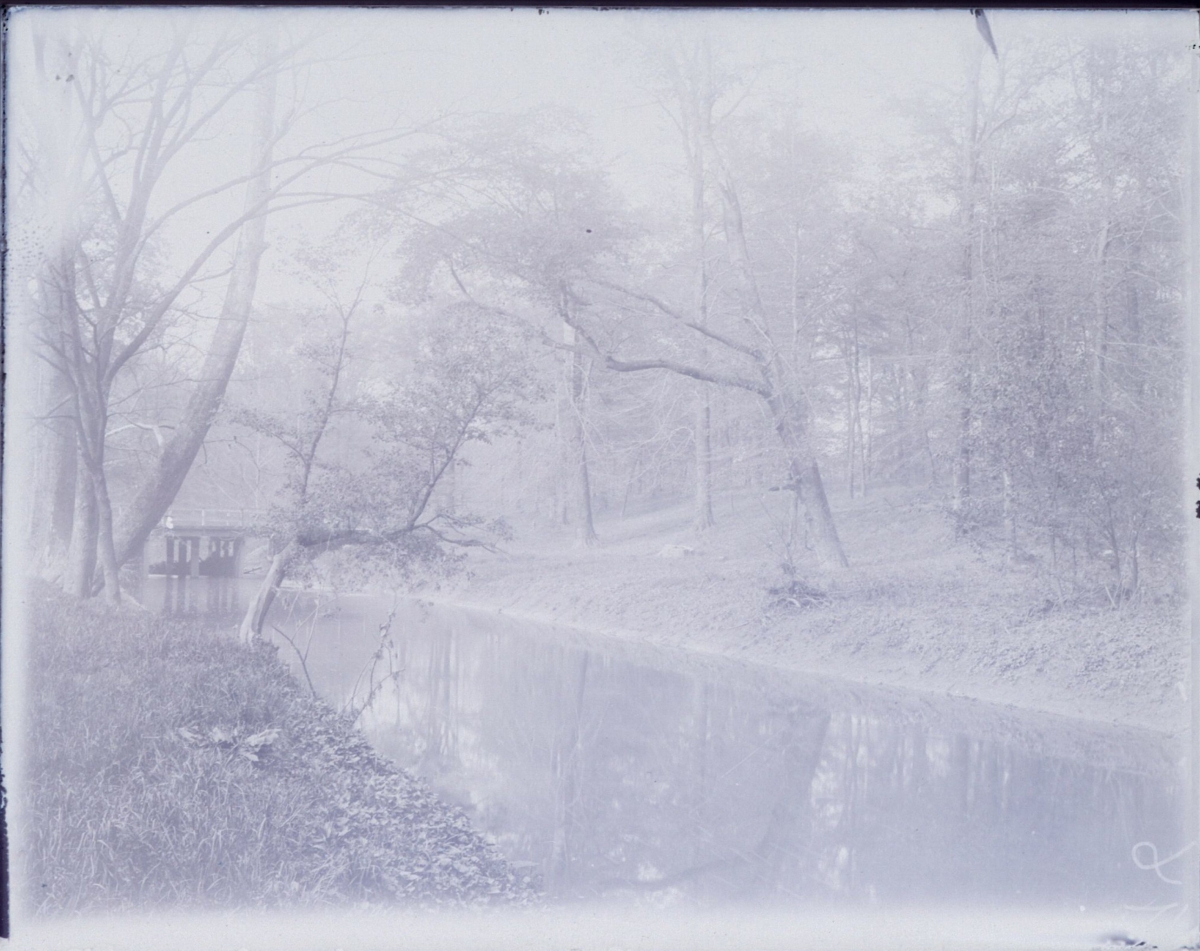
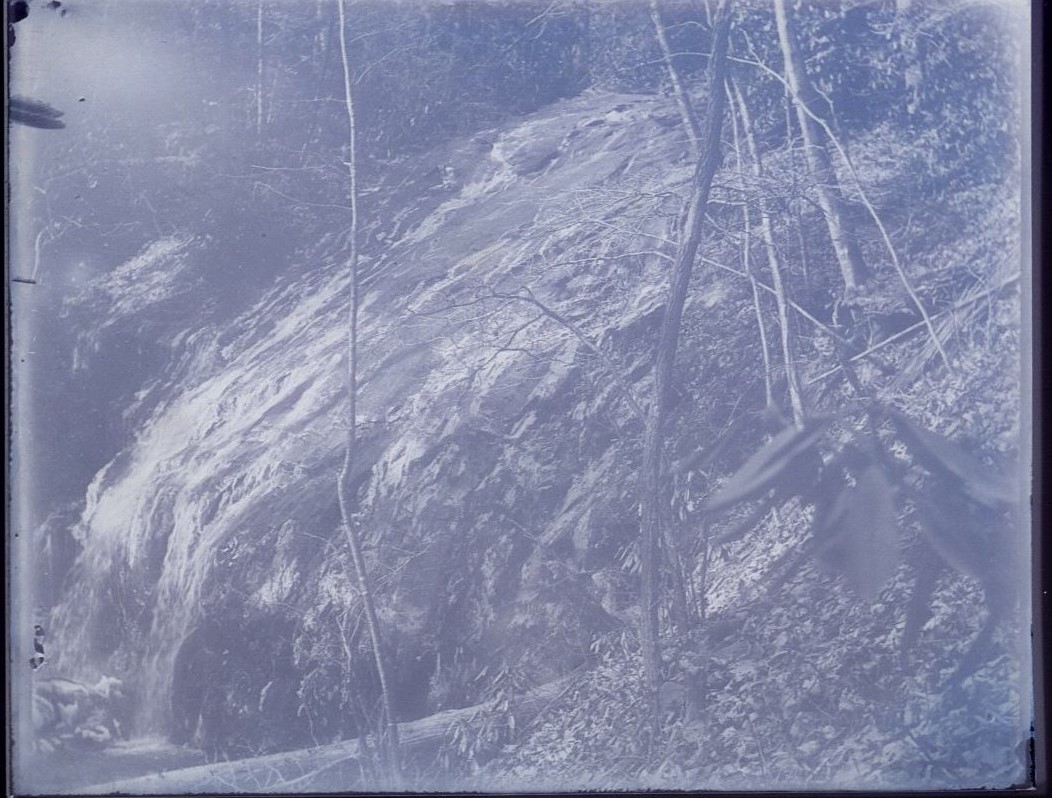
“Unidentified River,” Rev. J. Norton Atkins Collection (AC182), Special Collections Research Center, Appalachian State University.
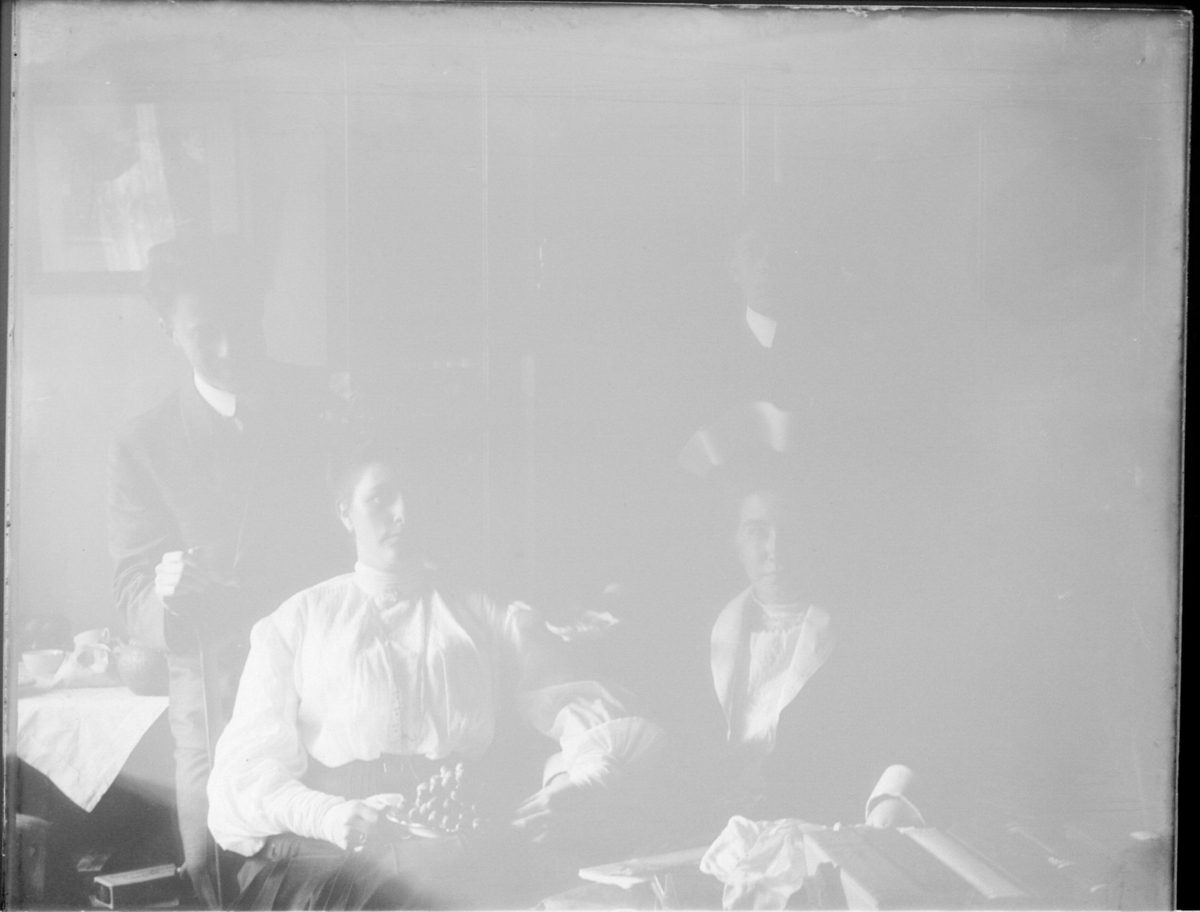
“4 Unidentified People in House, undated” is a somewhat poor-quality image as a result of overexposure of the scene to light during the portrait-taking or overdevelopment. We have no documentary evidence to suggest who these people may be or the location where the photograph was taken. Even with the overexposure, though, intriguing details are visible of the clothing, hair styles, and home furnishings. It is likely that these two men and two women were acquaintances of Rev. Atkins, possibly parishioners of one of the Episcopal churches which he served in Western North Carolina in the early 1900s.
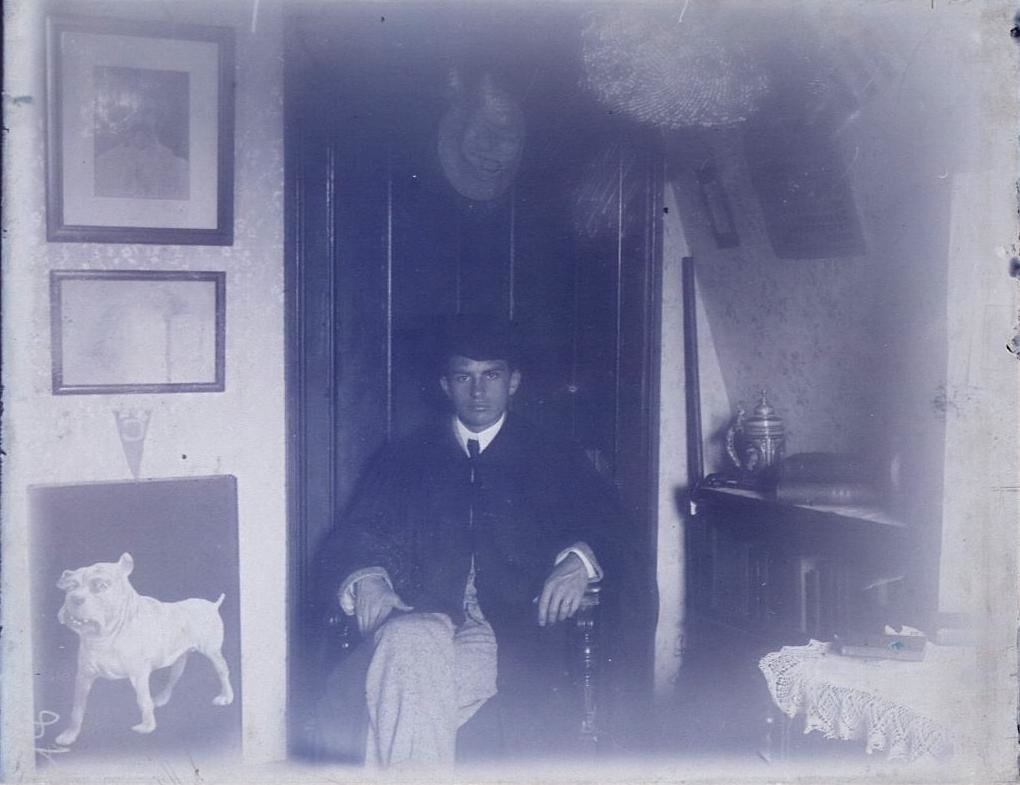
“Unidentified Man Sitting in a Chair,” an image similarly devoid of any external accompanying information, but likewise replete with details of decoration and dress of the period. The slanted wall to the right of the frame may suggest that the setting was an upstairs attic room.
Although most of the images held in this collection are in the form of photographic negatives or prints, a few of the surviving original images (5, to be exact) are in the form of glass plate negatives. An online guide from the Oregon State Libraries indicates that this technology was generally in use from the 1850s through the 1920s, and consisted of two major subtypes, which developed and were used in two types and phases: collodion wet plate, used from its invention in 1851 until the 1880s, and gelatin dry plate, common from 1873 until the late 1920s. The first type required that the photographer complete the entire process of photographing (exposure of the glass plate) and processing a reusable negative before the collodion emulsion chemical formula coating the glass dried out. The second type used silver gelatin-coated dry plate negatives which were made of thinner glass and a chemical coating that, because manufactured and used when dry, could be transported more easily and which were sturdier and easier-to-use. This seems to be the type used by Rev. Atkins for the few surviving glass plate photographs which survive in this collection, which helps date them sometime between the 1880s and the late 1920s. Given documentary evidence from the letters and other materials in the J. Norton Atkins collection of the photographer’s time in the area, we can estimate that these images were captured between the early 1900s and 1920s.
Below are digital scan reproductions of the other glass plate negatives in the collection.
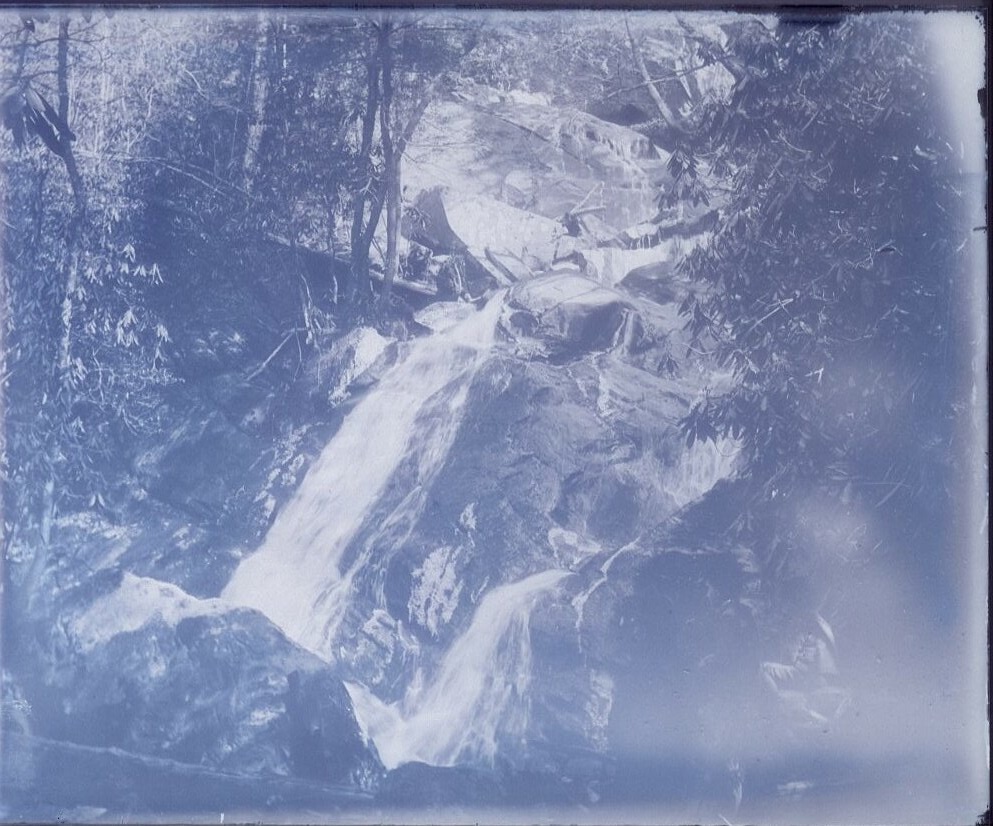
Glen Marie Falls, on the Glen Burney Trail, near Blowing Rock, North Carolina, as seen in Atkins’ time. The negative image from the glass plate has been reversed to create a positive black-and-white image and “lightly enhanced” with software.
Glen Burney Falls, a popular site near the village of Blowing Rock for hikers since the 1880s, and, reputedly, prior to that, “well-traveled by hunters and moonshiners,” according to an article in the Watauga Democrat by Steve Sudderth of the Blowing Rock Historical Society **.
Viewed today, the photographs in the Rev. J. Norton Atkins Papers invite us to pause and look closely at a world that is both familiar and distant. Even without names or precise locations, these images capture moments of daily life, work, and landscape in the High Country at a time of profound change. They remind us that history is often preserved in small, personal records, and that photographs can bridge generations by offering tangible connections to the past. Through collections like this one, the Special Collections Research Center helps ensure that these glimpses of earlier lives continue to inform, inspire, and spark curiosity among contemporary audiences.
--- Contributed by Ross Cooper, Public Services Associate
---
* “Early Photographic Formats and Processes in the Special Collections and Archives Research Center: Glass Plate Negatives,”https://guides.library.oregonstate.edu/earlyphotoformats/glassplatenegatives.
** "The Blowing Rock Historical Society: Glen Burney and Glen Marie Falls," by Steve Sudderth. The Watauga Democrat, Aug 13, 2024, Updated Sep 19, 2025, retrieved online on January 16, 2926 from:https://www.wataugademocrat.com/columns/the-blowing-rock-historical-society-glen-burney-and-glen-marie-falls/article_312ff4cc-5664-11ef-adff-4f0045db092c.html).

Close-up of "Unknown Man in a Chair" from a glass plate negative portrait, early 1900s

"Unknown Man in a Chair," detail of portrait